How to Practice Mindfulness: 9 Simple Exercises for Beginners
Mindfulness is not about emptying your mind or becoming calm on command. It is a simple skill of noticing what is happening, as it happens, without judging it. Here is how to start.

In this article
- What is mindfulness?
- What mindfulness is not
- Why practise mindfulness?
- Our minds wander a lot
- What does the evidence show?
- 9 simple mindfulness exercises
- 1. Mindful breathing (3 minutes)
- 2. The body scan (5–10 minutes)
- 3. The 5-4-3-2-1 senses check (2 minutes)
- 4. Mindful eating (5 minutes)
- 5. Mindful walking (5–10 minutes)
- 6. Mindful listening (3 minutes)
- 7. Label your thoughts and feelings (2–5 minutes)
- 8. The STOP practice (1 minute)
- 9. One thing at a time (daily)
- How to make mindfulness a habit
- Common challenges
- “My mind won’t stop wandering.”
- “I get sleepy.”
- “I feel restless or bored.”
- “I don’t have time.”
- “It makes me feel worse or anxious.”
- Who should be careful?
- Mindfulness in daily life
- When to seek professional help
- Frequently asked questions
- What is mindfulness in simple terms?
- How long should I practise mindfulness each day?
- What is the difference between mindfulness and meditation?
- Does mindfulness really work?
- Can mindfulness help with anxiety?
- What is the best mindfulness exercise for beginners?
- The bottom line
Key takeaways
- Mindfulness is paying attention to the present moment, on purpose and without judgement. It is a skill, not a state of blank calm.
- Minds wander a lot: one study found people's attention drifted nearly half the time, and they were less happy when it did.
- Reviews of research find moderate evidence that mindfulness programmes help with anxiety, low mood and pain, and less clear evidence for other benefits.
- Short, regular practice, such as mindful breathing, eating or walking, works better than occasional long sessions.
- If mindfulness increases distress, or you have trauma or serious mental health difficulties, go gently and seek guidance.
You are washing up, thinking about tomorrow’s meeting, and replaying an awkward conversation from last week. Twenty minutes later, you realise you have no memory of the last ten. The dishes are done, but you weren’t really there.
That drifting is completely normal, and it is exactly what mindfulness is designed to work with. This guide explains what mindfulness is, what research does and doesn’t show, and nine simple exercises to get you started, no cushion, incense or special skills required.
What is mindfulness?
Mindfulness is the practice of paying attention to the present moment, deliberately and without judgement. Jon Kabat-Zinn, who helped bring it into Western medicine, describes it as “paying attention in a particular way: on purpose, in the present moment, and non-judgmentally.”
It has three key parts:
- Attention: noticing what is happening: your breath, body, thoughts, sounds
- Present focus: being here, rather than replaying the past or rehearsing the future
- Acceptance: letting things be as they are, without labelling them “good” or “bad” or trying to fix them
What mindfulness is not
- It is not clearing your mind. Thoughts will still appear. Mindfulness is noticing them and coming back.
- It is not about feeling calm all the time. Sometimes you’ll notice tension, sadness or boredom, and that is part of it.
- It is not a religion. It has roots in Buddhist traditions but is practised in a secular way in health and education.
- It is not a quick fix. It is a skill that develops with practice.
- It is not suitable as a substitute for treatment when someone has a serious mental health condition.
Why practise mindfulness?
Our minds wander a lot
In a large study using a smartphone app that asked people what they were doing and thinking at random moments, researchers found that people’s minds were wandering nearly half the time, and that people reported being less happy when their minds wandered, regardless of what they were doing. Mindfulness trains us to notice when we’ve drifted and return.
What does the evidence show?
A widely cited review of trials found moderate evidence that mindfulness meditation programmes can reduce anxiety, depression and pain, and lower or no evidence of benefit for some other outcomes, such as stress and quality of life, in the studies reviewed. It also found no evidence that mindfulness was better than active treatments such as medication or exercise. Research quality varies, and results depend on the programme and the person.
So mindfulness is a promising, low-cost tool, not a cure-all. Many people find it helps them notice thoughts and feelings, step back from worries and respond more calmly.
9 simple mindfulness exercises
Try one or two and see what suits you. Each takes a few minutes.
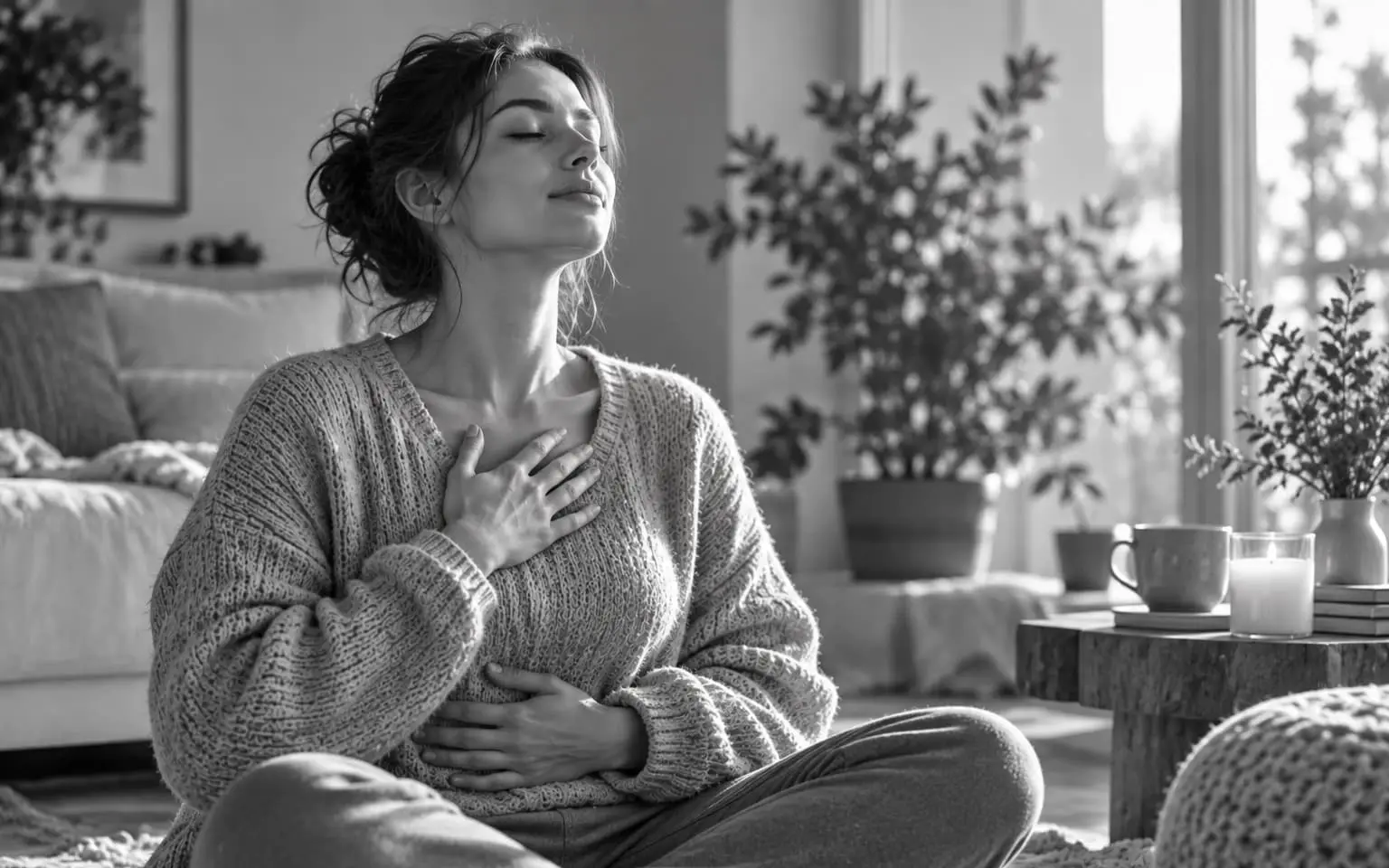
1. Mindful breathing (3 minutes)
The classic anchor.
- Sit comfortably with your back fairly upright, or lie down.
- Close your eyes or rest your gaze softly.
- Notice your breath where you feel it most: your nostrils, chest or belly.
- Follow each breath in and out. You don’t need to change it.
- When your mind wanders, which it will, gently notice, and return to the breath.
Each time you notice you have drifted and come back, that’s the practice, not a failure. If your mind is racing, a slightly longer exhale can help; see how to calm anxiety fast.
2. The body scan (5–10 minutes)
- Lie down or sit comfortably.
- Bring attention to your feet. What do you notice: warmth, tingling, pressure or nothing?
- Move slowly up your body: legs, hips, stomach, chest, hands, arms, shoulders, neck, face.
- Notice sensations without trying to change them.
- If you find tension, breathe towards it and see if it softens. If it doesn’t, that’s okay.
This is especially useful before sleep, though it can make you drowsy.
3. The 5-4-3-2-1 senses check (2 minutes)
A quick way to land in the present:
- 5 things you can see
- 4 things you can feel
- 3 things you can hear
- 2 things you can smell
- 1 thing you can taste
It’s helpful when your mind is spinning or you feel anxious.
4. Mindful eating (5 minutes)
Choose one bite of food, a raisin, a piece of fruit or your first mouthful of a meal.
- Look at it: colour, shape, texture
- Smell it
- Place it in your mouth and notice the texture
- Chew slowly and notice the flavours
- Swallow and notice the aftertaste
Eating this way, even for a few bites, brings attention back to a routine act and can make meals more enjoyable.
5. Mindful walking (5–10 minutes)
Walk slowly, indoors or outdoors.
- Feel your feet touching the ground: heel, sole, toes
- Notice the rhythm of steps
- Take in your surroundings: sounds, air on your skin, light
- When your mind wanders, return to the feeling of walking
You can also do this on an ordinary walk to work or the shops.
6. Mindful listening (3 minutes)
Choose a piece of music or simply listen to the sounds around you.
- Notice the layers: high and low, near and far, loud and soft
- Let the sounds come and go without labelling them
- If thoughts arise, notice them and return to listening
In conversation, try giving someone your full attention: put your phone down, notice their words and tone, and listen without planning your reply. That is mindful listening in daily life.
7. Label your thoughts and feelings (2–5 minutes)
When you notice a thought or emotion, silently name it:
- “Planning.”
- “Worrying.”
- “Remembering.”
- “Frustration.”
- “Sadness.”
Naming feelings has been linked with reduced emotional reactivity, and labelling thoughts helps you see them as passing events rather than facts. Our guide to how to name what you feel offers more, and how to stop overthinking shows how to step back from thought loops.
8. The STOP practice (1 minute)
A pocket-sized reset for busy days:
- S: Stop what you’re doing
- T: Take a breath
- O: Observe: what am I feeling in my body, thinking, sensing?
- P: Proceed, with more awareness
Use it before a difficult meeting, when you feel yourself getting irritated or whenever you’ve been on autopilot.
9. One thing at a time (daily)
Choose one routine activity, brushing your teeth, making tea, washing up or showering, and do it with full attention:
- Notice the sensations, sounds and smells
- Do only that
- When your mind drifts, come back
This turns ordinary moments into practice, no extra time needed.
How to make mindfulness a habit
Like any habit, it helps to start small and attach it to something you already do:
- Choose a cue: After I pour my coffee, I’ll take three mindful breaths.
- Start with 2–3 minutes and build up gradually
- Use reminders: a phone alert, a sticky note
- Try guided practices: apps, recordings or classes can make it easier
- Practise regularly rather than for long stretches occasionally
- Be kind about lapses. If you miss a day, start again. See how habits actually form.
If you’re building a daily routine, how to build a morning routine has ideas for slotting in a short practice.
Common challenges
“My mind won’t stop wandering.”
That is normal, and noticing is the practice. Every time you notice, you are doing it right.
“I get sleepy.”
Try sitting up, opening your eyes, or practising at a different time of day.
“I feel restless or bored.”
Notice restlessness as a sensation. If it is strong, try a walking practice.
“I don’t have time.”
Try one minute or STOP practice. It’s more useful to do a little often.
“It makes me feel worse or anxious.”
Some people find that sitting quietly brings up difficult feelings or memories. If this happens, keep your eyes open, focus on external sensations (sounds, feet on the floor), shorten the practice, or stop. If distress continues, speak to a professional.
Who should be careful?
Mindfulness is generally safe, but it isn’t right for everyone in every situation. Take care and seek guidance if you:
- have a history of trauma, where turning inward may bring up distressing memories
- have a serious mental health condition such as psychosis, severe depression or dissociation
- feel more anxious, numb or detached when meditating
Trauma-sensitive approaches and working with a qualified teacher or therapist can help. See why do I feel numb if emotional flatness is part of your experience.
Mindfulness in daily life
- At work: single-task, take mindful pauses between meetings, and breathe before replying to emails.
- In relationships: listen with full attention and pause before reacting. See how to have a difficult conversation.
- With stress: notice early signals in your body and use a short practice. See how to stop feeling overwhelmed.
- With children: model calm, breathe together and notice small things on walks.
- Before sleep: a body scan or gentle breathing can help you wind down.
When to seek professional help
Mindfulness can complement, but not replace, professional care. Consider speaking to a doctor or therapist if:
- anxiety, low mood or stress is persistent or affecting daily life,
- mindfulness practice increases your distress,
- you have trauma symptoms such as flashbacks or intense avoidance,
- you feel hopeless or have thoughts of harming yourself.
Evidence-based therapies including mindfulness-based cognitive therapy are available with trained practitioners. If you are in crisis, contact your local emergency number or a crisis line; in the United States you can call or text 988. See our disclaimer.
For a wider look at why days blur, see how to stop living on autopilot.
To make it a daily routine, see how to start a meditation habit.
Frequently asked questions
What is mindfulness in simple terms?
Noticing what’s happening right now, in your body, thoughts, feelings and surroundings, with openness and without judging it.
How long should I practise mindfulness each day?
Start with two to five minutes and build up if you like. Regular short practice is more valuable than rare long sessions.
What is the difference between mindfulness and meditation?
Mindfulness is a quality of attention. Meditation is a formal practice, such as sitting and following the breath, used to build it. You can also be mindful in everyday activities.
Does mindfulness really work?
Research finds moderate evidence of benefits for anxiety, low mood and pain, and less clear evidence for other outcomes. Many people find it useful, but results vary.
Can mindfulness help with anxiety?
It can help many people notice worried thoughts and respond more calmly. It is not a replacement for treatment where anxiety is severe.
What is the best mindfulness exercise for beginners?
Mindful breathing for three minutes, or the 5-4-3-2-1 senses exercise, are simple places to start.
The bottom line
Mindfulness is less about achieving calm and more about noticing what is here, again and again, with kindness. You don’t need special equipment or lots of time. Try three mindful breaths after you next pour a drink, or take one mindful bite at your next meal. Small moments of attention, repeated, are how the skill grows.
References & sources
- A wandering mind is an unhappy mind . Science, 330(6006), 932, 2010.
- Meditation programs for psychological stress and well-being: A systematic review and meta-analysis . JAMA Internal Medicine, 174(3), 357–368, 2014.
- Wherever You Go, There You Are: Mindfulness Meditation in Everyday Life . Jon Kabat-Zinn, Hyperion, 1994.
- Putting feelings into words: Affect labeling disrupts amygdala activity in response to affective stimuli . Psychological Science, 18(5), 421–428, 2007.
This article is for general information and education. It is not medical advice and cannot replace care from a qualified professional. Read our disclaimer.
Related reading
How to Calm Anxiety Fast: 9 Techniques to Try Right Now
When anxiety spikes, you don't need a theory. You need something that works in the next few minutes. Here are nine techniques, why they help, and how to choose between them.

How to Stop Overthinking: A Calmer Way to Handle a Busy Mind
Overthinking feels like effort, but it rarely gets you anywhere. Here is how to tell useful thinking from the kind that only circles — and what to do instead.

Emotional Regulation Basics: What It Means and How to Practise It
Emotional regulation isn't about suppressing feelings. It's about responding to them skilfully. A plain-language introduction with practical starting points.
More in Personal Growth
All Personal Growth →



Editor’s picks



The Clear Mind letter
One considered essay, now and then.
No streaks, no urgency. A short note when we publish something worth your attention.