How to Help a Child Who Is Scared of the Dark
Fear of the dark isn't a sign of a nervous or fragile child. It's one of the most common, developmentally normal fears there is, and it responds well to patience, small steps and the right kind of reassurance.
In this article
- Why fear of the dark is so common
- The imagination is developing faster than the fear-sorting skills to manage it
- It’s a normal developmental stage, not a sign of excess sensitivity
- The dark removes a sense of control
- Validate first, reassure second
- Practical steps to help
- 1. Take the fear seriously, without amplifying it
- 2. Ask what would help, and involve your child in the solution
- 3. Use a dim nightlight if it helps
- 4. Remove or reduce likely triggers
- 5. Build a consistent, calming bedtime routine
- 6. Offer a comfort object
- 7. Make the dark a little familiar during the day
- 8. Use a gradual approach rather than forcing exposure
- 9. Praise bravery specifically
- A worked example
- When to talk to a paediatrician
- Common mistakes
- Frequently asked questions
- Is it normal for children to be scared of the dark?
- What age does fear of the dark usually peak?
- Should I let my child sleep with a nightlight?
- How do I stop my child from needing me to stay until they fall asleep?
- Can scary TV shows or stories cause fear of the dark?
- When should I be concerned about my child’s fear of the dark?
- The bottom line
Key takeaways
- Fear of the dark is one of the most common childhood fears, closely tied to a developing imagination that can now conjure vivid, unseen threats.
- Validating the fear, rather than dismissing it, while still expressing calm confidence that your child can handle it, tends to work better than either extreme.
- Small, gradual steps, building comfort rather than forcing exposure all at once, help the fear ease without years of elaborate nightly workarounds.
- Persistent, intense fear that significantly disrupts sleep over a long period is worth discussing with a paediatrician.
The lights go off, and the whole mood of the room changes. A shadow that was perfectly ordinary an hour ago is suddenly something else entirely. Your child, confident and chatty all day, is now convinced something is in the closet, and no amount of “there’s nothing there” seems to help.
Fear of the dark is one of the most common childhood fears there is, and one of the most workable, with the right approach.
Why fear of the dark is so common
The imagination is developing faster than the fear-sorting skills to manage it
Young children develop a rich, active imagination well before they develop the cognitive tools to reliably sort imagined possibilities from real ones. In the dark, with visual information removed, imagination has far more room to fill in the blanks, and it often fills them with exactly what a child has been exposed to recently, a scary scene, a story, an overheard conversation.
It’s a normal developmental stage, not a sign of excess sensitivity
Research on childhood fears has found that fear of the dark, along with fears of monsters and imaginary creatures, is extremely common in early and middle childhood and typically follows a predictable developmental course, usually peaking in the preschool and early school years before gradually easing.
The dark removes a sense of control
Daytime offers visual confirmation of safety; the dark removes that confirmation entirely, which can make an otherwise safe, familiar room feel suddenly uncertain, especially for a child still learning to manage uncertainty in general.
Validate first, reassure second
The instinct to say “there’s nothing to be afraid of” is understandable, and it often backfires, because it can feel to a child like their very real fear is being dismissed or not taken seriously. A more effective approach combines genuine validation with confidence: acknowledging the fear as real, while still expressing calm belief that they can handle it.
Practical steps to help
1. Take the fear seriously, without amplifying it
Avoid both dismissing (“don’t be silly, there’s nothing there”) and over-investigating in a way that confirms the threat (an elaborate search under every piece of furniture, checking the closet multiple times). A brief, calm check, followed by a confident statement, tends to work better than either extreme: “I checked, and you’re safe. I know the dark feels scary, and you can handle this.”
2. Ask what would help, and involve your child in the solution
Older children especially can often identify what would make a difference: a particular nightlight, leaving the door open a certain amount, a specific comfort object. Involving them builds a sense of agency over the fear, rather than it simply being managed for them.
3. Use a dim nightlight if it helps
A soft, dim nightlight is a reasonable, low-cost tool for many children and doesn’t need to be treated as something to quickly wean off. It can simply be one part of a comforting bedtime setup for as long as it’s useful.
4. Remove or reduce likely triggers
If a scary show, story or image has been part of the day, especially close to bedtime, that’s often directly feeding the specific content of the fear. Adjusting evening media, particularly in the hour or two before bed, can make a real difference.
5. Build a consistent, calming bedtime routine
Predictability is genuinely calming for an anxious mind. The same steps, in the same order, most nights, reduces the amount of uncertainty a child has to manage right as the lights go out.
6. Offer a comfort object
A familiar stuffed animal or blanket can serve as a stand-in for reassurance when you’re not in the room, and research on comfort objects supports their usefulness in easing nighttime fears for many children.
7. Make the dark a little familiar during the day
Spending some low-stakes time in a dim or dark room together, during the day, reading with a flashlight, playing a shadow game, can gradually build a different, more playful association with darkness, separate from the high-stakes context of bedtime alone.
8. Use a gradual approach rather than forcing exposure
If your child currently needs you to stay until they’re fully asleep, work toward leaving gradually: sitting further away over several nights, then just outside the door, then checking in briefly rather than staying the whole time. Sudden, forced independence tends to backfire; gradual, consistent steps tend to hold.
9. Praise bravery specifically
Notice and name moments of courage directly: “You stayed in your bed even though it felt scary. That’s brave.” This reinforces the behaviour you want to see more of, more effectively than simply hoping the fear fades on its own.
If bedtime fear is tangled up with not wanting you to leave the room, see separation anxiety at bedtime.
For the daytime version of a similar fear, how to help a child scared of going to school covers related ground.
A worked example
Six-year-old Theo has started refusing to sleep unless a parent stays in the room the whole night, after watching a mildly scary cartoon a few weeks earlier.
- Validate, don’t dismiss: “I hear that the dark feels really scary right now. That makes sense, and I know you can handle it with some help.”
- Involve him: he chooses a nightlight shape and decides he wants the door left slightly open.
- Reduce triggers: screen time in the evening shifts to calmer content, especially after dinner.
- Consistent routine: bath, story, the same closing phrase, every night.
- Comfort object: his favourite stuffed dog stays in bed with him.
- Gradual leaving: his parent sits by the door for a week, then just outside it, then checks in once rather than staying the whole night.
- Praise bravery: “You stayed in your bed on your own tonight. That took courage.”
Within a few weeks, Theo is sleeping independently again most nights, with occasional harder nights that ease with the same steady approach.
When to talk to a paediatrician
Occasional fear of the dark is a normal developmental stage. It’s worth raising with a paediatrician if:
- the fear is extremely intense, persistent, or significantly disrupts sleep over a long period,
- it’s accompanied by other signs of significant anxiety during the day,
- your child is much older than the typical age range and the fear is severe or newly emerging,
- it doesn’t ease at all despite consistent, supportive steps over several weeks.
The American Academy of Pediatrics offers further guidance on supporting children through fears and anxieties. See our disclaimer.
Common mistakes
- Dismissing the fear outright. It can leave a child feeling unheard, which tends to intensify rather than ease the fear.
- Over-investigating in a way that confirms the threat. An elaborate nightly search can inadvertently signal that there really might be something to find.
- Removing the nightlight or comfort object too soon. These tools can be used for as long as they’re genuinely helpful, without rushing to phase them out.
- Forcing sudden independence. Abruptly withdrawing support tends to backfire; gradual, consistent steps work better.
- Ignoring evening media as a contributing factor. Scary content close to bedtime often directly shapes what a child imagines once the lights go out.
If big emotions show up around bedtime more broadly, how to help a child with big emotions has related tools.
If this is a pattern for you, our article on how to stop bedtime stalling may help.
Frequently asked questions
Is it normal for children to be scared of the dark?
Yes, extremely common. Fear of the dark is one of the most frequently reported childhood fears and typically follows a normal developmental course, usually easing with age and gentle support.
What age does fear of the dark usually peak?
It tends to be most common in the preschool and early school years, broadly linked to a child’s developing imagination outpacing their ability to reliably sort imagined from real threats.
Should I let my child sleep with a nightlight?
Yes, a dim nightlight is a reasonable, low-cost comfort tool for many children and doesn’t need to be treated as something to rush to eliminate.
How do I stop my child from needing me to stay until they fall asleep?
Work toward leaving gradually, sitting further away over several nights, then just outside the door, rather than withdrawing support all at once, which tends to backfire.
Can scary TV shows or stories cause fear of the dark?
Yes, exposure to frightening content, especially close to bedtime, often directly shapes what a child imagines once the lights go out, and adjusting evening media can meaningfully help.
When should I be concerned about my child’s fear of the dark?
If it’s unusually intense, persists well beyond the typical age range, significantly disrupts sleep over a long period, or doesn’t ease with consistent support, it’s worth discussing with a paediatrician.
The bottom line
Fear of the dark is one of the most common, developmentally normal fears a child can have, closely tied to an imagination that’s developing faster than the skills to manage it. Validate the fear, involve your child in finding what helps, build a consistent routine, and work toward independence gradually. Most children grow through this stage with patience and the right kind of support, not by having the fear dismissed.
References & sources
- Developmental changes in children's fear-related behaviors . Journal of Clinical Child Psychology, 1991.
- Help Your Child Manage Anxiety: Tips for Home & School . HealthyChildren.org, American Academy of Pediatrics.
- Emotion coaching and children's emotion regulation . Journal of Family Psychology, 1996.
This article is for general information and education. It is not medical advice and cannot replace care from a qualified professional. Read our disclaimer.
Related reading
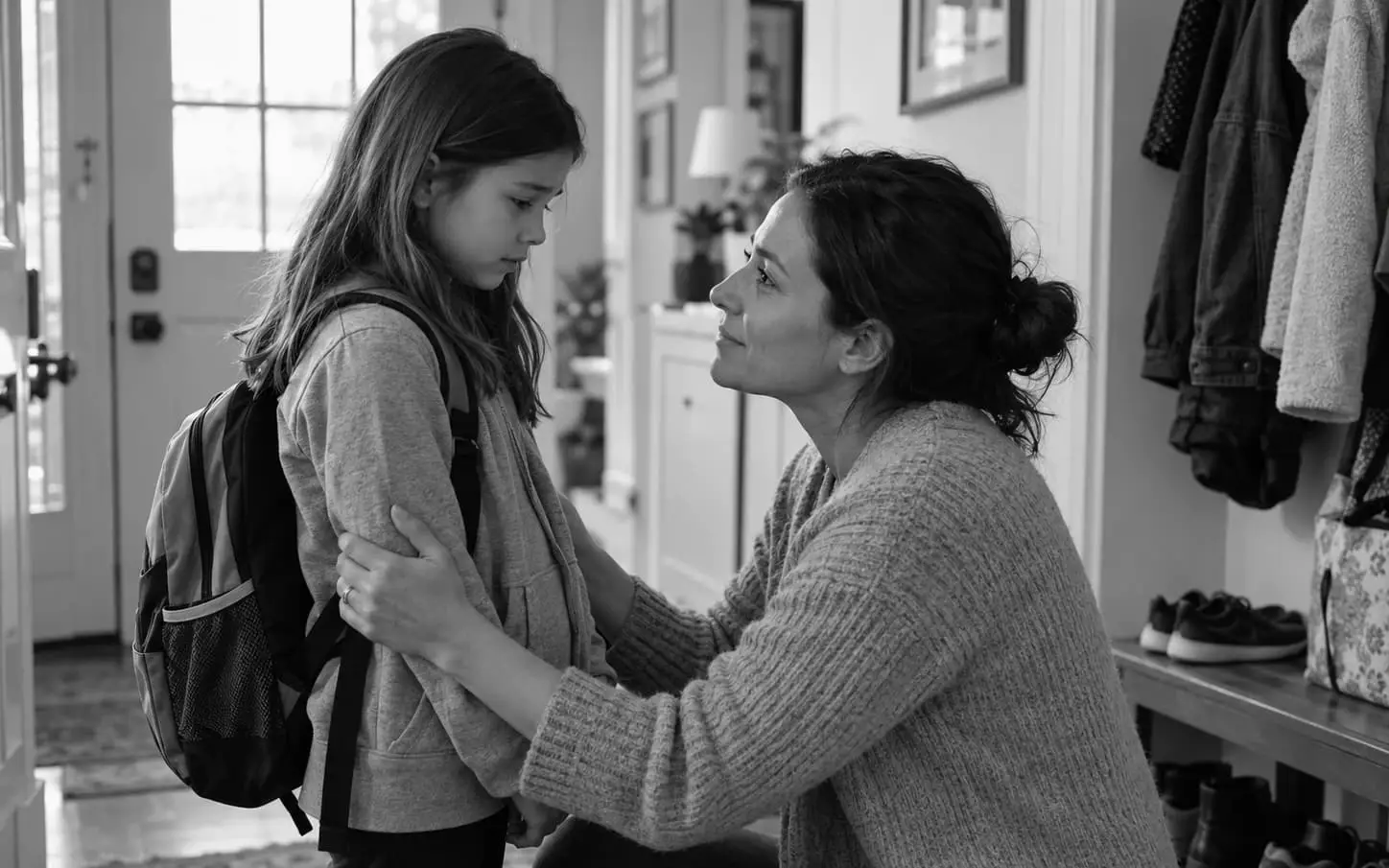
Child Scared to Go to School? What to Say and How to Help
Tears at the door, stomachaches on school mornings, 'I'm not going.' School fear is common and treatable. Here is how to respond calmly, what to say, and when to involve professionals.

Separation Anxiety at Bedtime: Why It Happens and How to Help
Nights ask children to do the hardest thing: separate from you in the dark, alone, for hours. Bedtime separation anxiety is common and developmentally normal, and it responds well to a steady approach.

How to Help a Child With Big Emotions: A Practical Guide for Parents
A meltdown isn't defiance; it's a nervous system that's been overwhelmed past its current capacity. Here's how to help your child through the moment, and build the skills that make the next one smaller.
More in Parenting
All Parenting →
Editor’s picks



The Clear Mind letter
One considered essay, now and then.
No streaks, no urgency. A short note when we publish something worth your attention.