Why Do I Feel Nothing When Something Good Happens?
The promotion, the kind message, the small win, you know they're good, and still nothing stirs. That gap between knowing and feeling has a name, and it's more common, and more workable, than it seems.
In this article
- This has a name, and it isn’t rare
- Why the capacity to feel good can go quiet
- Chronic stress and overload
- Depression
- Trauma and chronic hypervigilance
- Sleep deprivation
- Emotional suppression becoming generalised
- Medication side effects
- It isn’t ingratitude
- Gentle steps to reconnect with pleasure
- 1. Don’t try to force the big feeling
- 2. Start with physical sensation, not emotion
- 3. Lower the overall load where you genuinely can
- 4. Notice faint positive signals, and name them specifically
- 5. Protect sleep as a direct lever
- 6. Reconnect with others in low-pressure ways
- 7. Rule out medication or medical causes
- 8. Be patient with the timeline
- A worked example
- Common mistakes
- When to seek help
- Frequently asked questions
- Why don’t I feel happy when good things happen to me?
- Is feeling nothing about good news a sign of depression?
- How is this different from general emotional numbness?
- Can stress alone cause this, without depression?
- How long does it take to feel pleasure again?
- Should I see a doctor if I can’t feel happy about good things?
- The bottom line
Key takeaways
- Feeling nothing in response to good news, known clinically as anhedonia, is a recognised pattern, not a sign of ingratitude or a character flaw.
- It can stem from chronic stress, depression, trauma or simple prolonged overload, where the system that processes pleasure has been dialled down to conserve energy.
- Forcing yourself to feel happy rarely works; gently reconnecting through small, specific sensations tends to work better than chasing big emotional reactions.
- Persistent inability to feel pleasure, especially alongside low mood, is worth discussing with a doctor, since effective treatment exists.
Good news arrives, exactly the kind you’d have celebrated a year ago, and instead of lifting, something in you stays flat. You know, intellectually, that this is good. The feeling that’s supposed to go with that knowledge just doesn’t show up.
If you feel nothing when something good happens, you’re describing a real, recognised pattern, not ingratitude, and not a personal failing. Understanding what’s behind it is the first step to gently reconnecting with it.
This has a name, and it isn’t rare
The reduced ability to feel pleasure in response to things that would normally bring it is sometimes called anhedonia in clinical contexts. Research describes it as a genuine, measurable shift in how the brain’s reward systems respond, not a matter of willpower or attitude. It shows up across a range of situations, not only in diagnosed mental health conditions, which is part of why it so often gets mistaken for a character problem rather than a real, treatable pattern.
Why the capacity to feel good can go quiet
Chronic stress and overload
Prolonged stress without enough recovery can lead the nervous system to dial down emotional responses generally, including positive ones, as a way of conserving limited energy. Research on job demands and burnout describes this kind of depletion directly: when you’ve been running on empty for a long stretch, even good news may not have much left to land on.
Depression
A blunted or absent response to pleasure is one of the core, defining features of depression, and importantly, it doesn’t always come packaged with visible sadness. Depression can look like flatness, disconnection or indifference just as often as it looks like crying.
Trauma and chronic hypervigilance
If your system has spent a long time focused on scanning for threat, staying alert, staying prepared, it may have little capacity left over for registering safety or pleasure, both of which require a kind of relaxed openness that’s hard to access while on guard.
Sleep deprivation
Research reviewing sleep and emotional function has linked insufficient sleep with reduced emotional responsiveness generally, which can include a dulled reaction to positive events specifically, not only increased reactivity to negative ones.
Emotional suppression becoming generalised
If you’ve spent a long period managing or minimising difficult feelings, grief, fear, anger, that suppression doesn’t always stay neatly confined to the negative. It can generalise, making the full emotional range, including joy, harder to access on demand.
Medication side effects
Some medications, particularly certain antidepressants, are associated with emotional blunting as a known side effect, which can include a reduced response to positive events. This is worth raising directly with a prescriber rather than assuming it’s purely psychological.
It isn’t ingratitude
This is worth stating clearly, because the experience often comes bundled with guilt: I should be happy about this, what’s wrong with me? The honest answer is usually that your system is depleted, overloaded or protecting itself, not that you don’t actually value the good thing in front of you. Guilt on top of the flatness tends to make it harder to address, not easier.
Gentle steps to reconnect with pleasure
1. Don’t try to force the big feeling
Demanding that joy arrive on command, especially from a depleted or overloaded system, usually backfires and adds pressure on top of an already difficult experience. Aim for small, low-stakes reconnection instead of an emotional breakthrough on demand.
2. Start with physical sensation, not emotion
Emotions can feel too abstract to access directly when flat. Sensation is often an easier doorway: the warmth of tea, the texture of a fabric, fresh air on your skin. This builds a bridge toward feeling without forcing it.
3. Lower the overall load where you genuinely can
If chronic stress or overload is part of the picture, some real reduction in demands, even modest, matters more than any single coping technique. See burnout: signs, causes and how to recover.
4. Notice faint positive signals, and name them specifically
Rather than waiting for a clear, strong feeling, try naming small, faint shifts: “a flicker of relief,” “a moment that was slightly pleasant.” Practising with small, faint signals rebuilds the pathway for stronger ones over time.
5. Protect sleep as a direct lever
Since sleep deprivation is linked with blunted emotional responsiveness, prioritising consistent, adequate sleep is one of the more concrete, evidence-backed steps available, even when it doesn’t feel directly related to the flatness.
6. Reconnect with others in low-pressure ways
Isolation tends to deepen this pattern. Being around people, even without needing a deep or emotionally demanding interaction, can help gently re-engage a system that’s gone quiet.
7. Rule out medication or medical causes
If flatness started or worsened after a medication change, or shows up alongside other physical symptoms, bring it to a doctor directly rather than assuming it’s purely circumstantial.
8. Be patient with the timeline
If the flatness built up gradually, through months or years of stress, suppression or overload, expecting a quick reversal isn’t realistic. Small, repeated moments of sensation and safety tend to work better than trying to rush the process.
If the flatness extends to most things, not just good news specifically, see why do I feel emotionally numb for the wider pattern.
A worked example
After a demanding year, Felix gets genuinely exciting news, a long-hoped-for opportunity, and notices he feels almost nothing, just a flat, distant “that’s good, I guess.”
- Recognise it, without judgement: “I think I’m depleted, not ungrateful.”
- Don’t force it: he doesn’t try to manufacture excitement for others’ benefit.
- Sensation first: he notices the warmth of his coffee the next morning, nothing dramatic, just present.
- Reduce load: he takes a weekend fully off, with no catching up on work.
- Name faint signals: “a small flicker of pride” when he tells a close friend the news.
- Protect sleep: he goes to bed earlier for a week, rather than staying up to “make the most of” free time.
Weeks later, excitement about the opportunity finally arrives, not all at once, but in small, increasingly frequent moments.
If pride itself feels hard to access even in small wins, how to be proud of yourself has related tools.
Common mistakes
- Trying to force big feelings immediately. It tends to add pressure to an already depleted system.
- Assuming something is fundamentally wrong with your character. This pattern usually reflects depletion or protection, not a flaw.
- Ignoring it because nothing is “technically” wrong. Flatness can build from accumulated stress even without one obvious cause.
- Skipping sleep and physical basics. They’re underrated, concrete levers for emotional responsiveness.
- Isolating further. It’s a natural pull when flat, but it tends to prolong rather than ease the pattern.
When to seek help
Talk to a doctor or mental health professional if:
- the flatness lasts more than a few weeks or is getting worse,
- it affects your relationships, work or daily functioning,
- it started after a specific medication change,
- it comes with persistent low mood, hopelessness or loss of interest more broadly,
- you have thoughts of harming yourself.
A reduced capacity for pleasure connected to depression, trauma or burnout generally responds well to treatment. See the National Institute of Mental Health for guidance on finding care. If you are in crisis, contact your local emergency number or, in the United States, call or text 988. See our disclaimer.
Frequently asked questions
Why don’t I feel happy when good things happen to me?
Often because of chronic stress, depression, trauma or prolonged overload, all of which can dial down the brain’s response to pleasure as a form of protection or conservation, not because you don’t value the good thing.
Is feeling nothing about good news a sign of depression?
It can be. A blunted response to pleasure, sometimes called anhedonia, is a core feature of depression, though it can also occur without a formal diagnosis, from stress or burnout alone.
How is this different from general emotional numbness?
They overlap closely. This pattern specifically describes reduced response to positive events; broader emotional numbness can affect both positive and negative feelings. See why do I feel emotionally numb for the wider pattern.
Can stress alone cause this, without depression?
Yes. Chronic stress and burnout can lead to a generally blunted emotional response, including to good news, even without meeting criteria for depression.
How long does it take to feel pleasure again?
It varies depending on the cause and how long it’s been building. Small, consistent practice over weeks, alongside reducing overall load, often shows gradual improvement; professional support can help it move faster.
Should I see a doctor if I can’t feel happy about good things?
Yes, especially if it persists for more than a few weeks or comes with other signs of low mood, since this pattern often responds well to treatment once properly addressed.
The bottom line
Feeling nothing when something good happens usually reflects a depleted or protective system, not a lack of gratitude. Don’t force the big feeling; start with small sensations, reduce the load where you genuinely can, and protect your sleep. Pleasure tends to return gradually, in small moments, once the underlying depletion eases.
References & sources
- Anhedonia: A diagnostic chameleon . World Psychiatry, 2010.
- The role of sleep in emotional brain function . Annual Review of Clinical Psychology, 10, 679–708, 2014.
- Job demands-resources theory: Taking stock and looking forward . Journal of Occupational Health Psychology, 22(3), 273–285, 2017.
- Caring for Your Mental Health . National Institute of Mental Health.
This article is for general information and education. It is not medical advice and cannot replace care from a qualified professional. Read our disclaimer.
Related reading
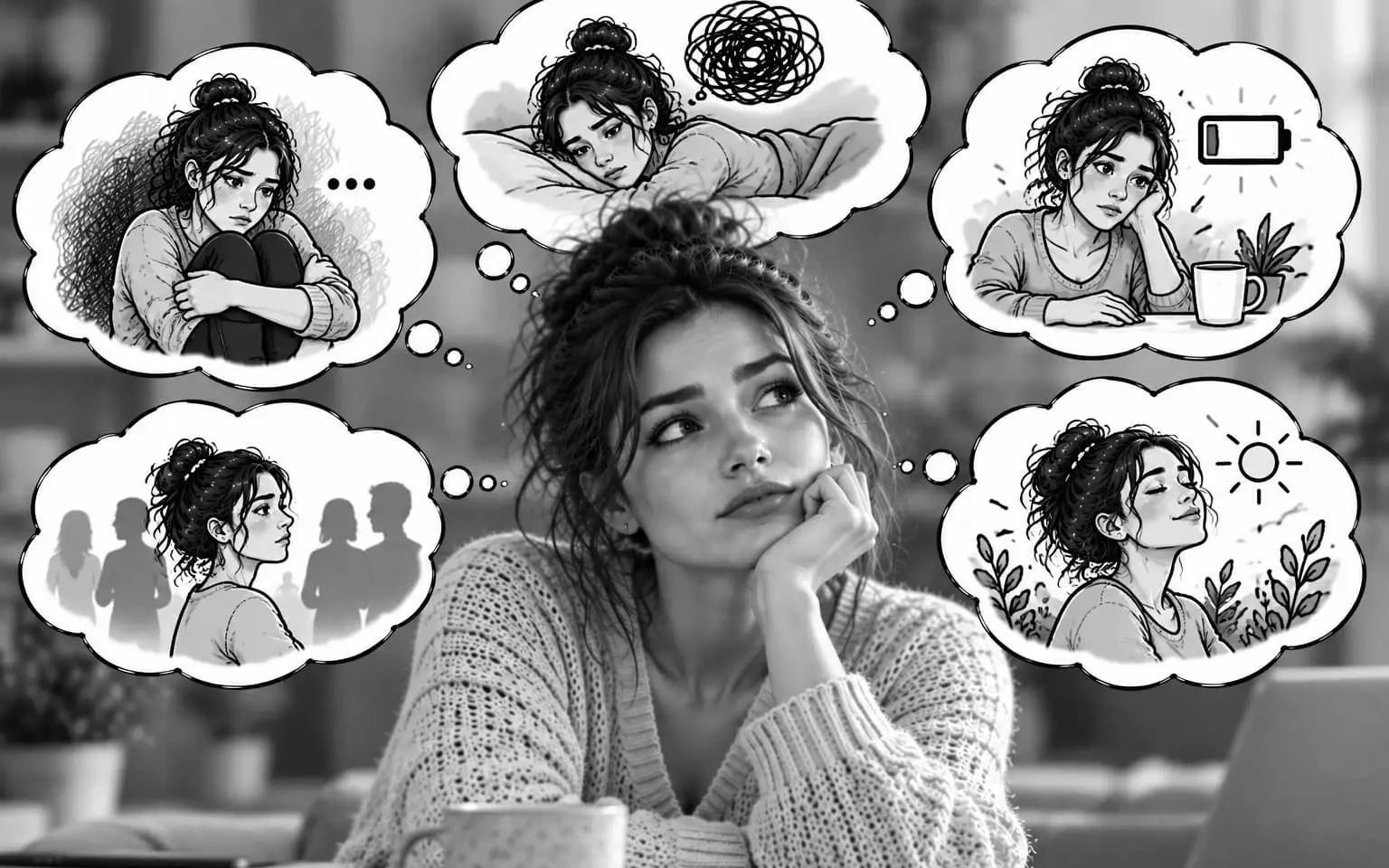
Why Do I Feel Emotionally Numb? Causes and How to Feel Again
Numbness isn't the absence of emotion; it's usually the nervous system's way of turning the volume down when there's been too much to feel. Here's what causes it and how to come back gently.

Burnout: Signs, Causes and How to Recover
Burnout is not just being tired. It is what happens when chronic pressure outlasts your capacity to recover. Here is how to recognise it, why it happens and how to come back from it.

How to Be Proud of Yourself: 7 Ways to Actually Feel It
You did the hard thing, and somehow it still doesn't feel like enough. Pride isn't about achievement alone; it's a skill of noticing, one that can feel unfamiliar if you've never practised it.
More in Emotional Health
All Emotional Health →


Editor’s picks



The Clear Mind letter
One considered essay, now and then.
No streaks, no urgency. A short note when we publish something worth your attention.