How to Stop Impulse Buying: 9 Ways to Pause Before You Pay
Impulse buying is rarely about the item. It's usually a small, fast reward for stress, boredom or a bad day. Here's how to interrupt the loop without feeling deprived.
In this article
- Why impulse buying feels so hard to resist
- The reward comes first, the cost later
- It soothes a feeling
- Shopping has become frictionless
- Scarcity and urgency cues
- It’s not about willpower
- 9 ways to stop impulse buying
- 1. Notice the feeling underneath
- 2. Use a waiting period
- 3. Add friction
- 4. Keep a “want list”
- 5. Shop with a list
- 6. Identify your triggers
- 7. Replace the reward
- 8. Make the cost visible
- 9. Build a small “yes” fund
- A worked example
- Common mistakes
- When to seek help
- Frequently asked questions
- Why can’t I stop impulse buying?
- Is impulse buying an addiction?
- How long should I wait before buying something?
- Does deleting shopping apps really help?
- What if I regret my purchases afterwards?
- Can impulse buying be linked to mental health?
- The bottom line
Key takeaways
- Impulse buying is often an emotional habit, a quick reward for stress, boredom or low mood, rather than a lack of financial knowledge.
- The urge is strongest in the moment and fades quickly, which is why a short delay is one of the most effective tools.
- Adding friction to spending, such as removing saved cards and shopping apps, works better than relying on willpower.
- If spending feels compulsive and causes serious debt or distress, it's worth discussing with a professional.
A notification, a “last chance” banner, a bad afternoon, and suddenly there’s something in your cart you hadn’t thought about ten minutes ago. By the time the package arrives, the excitement has already faded, and what’s left is a small knot of guilt and a slightly lighter account.
If impulse buying keeps happening, it’s rarely a knowledge problem. It’s a habit with a reward, and it responds well to a few specific changes.
Why impulse buying feels so hard to resist
The reward comes first, the cost later
Research using brain imaging has found that anticipating a purchase activates reward circuits, while the pain of paying shows up later and more weakly. That gap makes spending feel good now and costly afterwards.
It soothes a feeling
Stress, boredom, loneliness and low mood all make impulsive spending more likely. A purchase delivers a quick lift, so the brain learns to reach for it, the same way it would learn any habit. The same loop drives late-night snacking out of boredom.
Shopping has become frictionless
One-click payments, saved cards, targeted ads and limited-time offers remove the pauses that used to give second thoughts a chance.
Scarcity and urgency cues
“Only two left” and countdown timers are designed to compress your decision time, which favours the impulsive choice over the considered one.
It’s not about willpower
Willpower is a thin defence against a design built to make buying easy. A better strategy is to change the environment and add small delays, so the urge has time to fade before you act.
9 ways to stop impulse buying
1. Notice the feeling underneath
When you feel the pull, ask: What am I feeling right now, and what do I hope this will change? If the answer is stress or boredom, the item is a substitute for something else.
2. Use a waiting period
Wait 24 hours for small purchases and longer for bigger ones. The urge usually fades quickly, and many things you wanted at 9 p.m. stop mattering by the morning.
3. Add friction
Remove saved card details, log out after shopping, delete shopping apps from your phone and unsubscribe from promotional emails. A few extra steps are often enough to break the loop.
4. Keep a “want list”
Write the item down with the date instead of buying it. Review the list after a week or two. You’ll find most things lose their pull, and the ones that remain are probably worth it.
5. Shop with a list
Decide what you need before you open a shop or app, and stick to it. This blocks the drift toward promotions and add-ons.
6. Identify your triggers
Notice when and where you slip: late at night, after a stressful day, while scrolling social media. Trigger-specific plans, such as no shopping apps after 9 p.m., are more effective than general intentions.
7. Replace the reward
If shopping is soothing a feeling, give yourself another quick, cheap lift: a walk, a call, a hot drink, a short video. If new routines keep collapsing, see why you keep breaking your routine.
8. Make the cost visible
Think in terms of what the item costs in hours of work, or what else the money could do. Paying with cash or tracking purchases in a simple note can make spending more tangible.
9. Build a small “yes” fund
A modest monthly amount you can spend on anything you like, guilt-free, reduces the all-or-nothing pressure that often leads to a binge. If you also want a broader plan, see how to stick to a budget when you hate budgeting.
A worked example
Alex notices a pattern of late-night online buying, usually after a stressful day.
- Notice the feeling: Alex realises most purchases follow tension at work, not real need.
- Waiting period: a 24-hour rule for anything over $20.
- Friction: Alex removes saved cards and deletes two shopping apps.
- Want list: items go onto a note instead of into the cart.
- Replace the reward: a ten-minute walk after work replaces the evening scroll.
- Yes fund: $40 a month for anything Alex wants, no questions asked.
Within a couple of months, late-night purchases drop sharply, and Alex notices fewer packages and less buyer’s remorse.
Common mistakes
- Relying on willpower alone. It rarely holds against frictionless, well-designed temptation.
- Banning all spending. Total restriction often triggers a rebound binge.
- Ignoring the emotion underneath. If the feeling isn’t addressed, another outlet will take its place.
- Shopping when tired, stressed or bored. These states make impulse buying far more likely.
- Treating one slip as failure. Return to the plan next time; see how to make a habit stick after a relapse.
When to seek help
Consider speaking with a doctor, therapist or financial counsellor if:
- spending feels compulsive or out of control,
- it causes serious debt, secrecy or conflict with loved ones,
- you feel intense guilt, distress or a “high” followed by a crash after purchases,
- it coexists with depression, anxiety or other conditions.
Many nonprofit credit counselling services offer free or low-cost guidance. See our disclaimer.
Frequently asked questions
Why can’t I stop impulse buying?
Because it’s often a habit that delivers a quick reward for stress or boredom, supported by an environment that makes buying effortless.
Is impulse buying an addiction?
Occasional impulse buying is common and not an addiction. Compulsive spending that causes serious harm may need professional assessment.
How long should I wait before buying something?
A common rule is 24 hours for small purchases and longer, such as a week, for bigger ones.
Does deleting shopping apps really help?
Yes, adding friction reduces automatic purchases. Even small obstacles can break the habit loop.
What if I regret my purchases afterwards?
Notice the pattern, review what triggered it and apply a waiting period next time. Regret is useful information, not a reason for self-attack.
Can impulse buying be linked to mental health?
It can be, particularly with depression, anxiety or stress. If spending is tied to low mood or feels out of control, a professional can help.
The bottom line
Impulse buying is usually a quick reward for a feeling, supported by an environment designed to make spending easy. Name the feeling, wait before you pay, add friction and give yourself a different small lift. The urge is strong, but it’s short, and a pause is often all it takes.
References & sources
- Impulse buying: A meta-analytic review . Journal of the Academy of Marketing Science, 2013.
- How are habits formed: Modelling habit formation in the real world . European Journal of Social Psychology, 40(6), 998–1009, 2010.
- Neural predictors of purchases . Neuron, 53(1), 147–156, 2007.
- Self-determination theory and the facilitation of intrinsic motivation, social development, and well-being . American Psychologist, 55(1), 68–78, 2000.
This article is for general information and education. It is not medical advice and cannot replace care from a qualified professional. Read our disclaimer.
Related reading
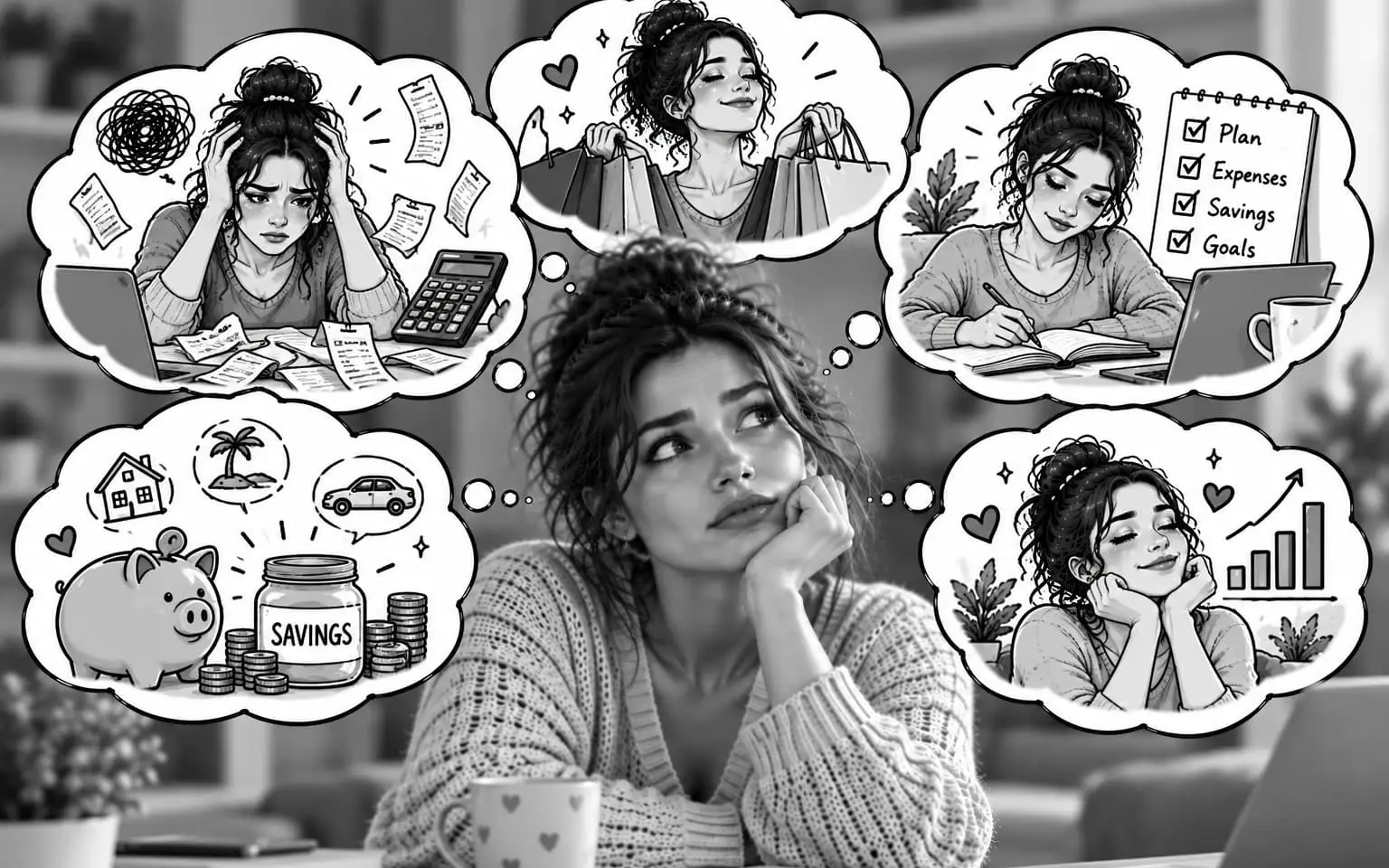
How to Stick to a Budget When You Hate Budgeting
Budgeting doesn't fail because you lack discipline. It usually fails because the system demands more tracking than any ordinary life can sustain. Here's a lower-friction way to stay on top of money.

How to Stop Late-Night Snacking Out of Boredom
The fridge opens not because you're hungry, but because the evening has gone quiet and food is the nearest, easiest thing to reach for. Here's how to fill that gap with something that actually works.
Why You Keep Breaking Your Routine (and What to Change Instead)
When routines collapse, willpower is rarely the real problem. Look at the design of the habit, your environment and your expectations, and adjust from there.
More in Habits
All Habits →

Editor’s picks



The Clear Mind letter
One considered essay, now and then.
No streaks, no urgency. A short note when we publish something worth your attention.